
We all want to be Alice, at least once!
You surely know the story of a girl chasing a white rabbit. She falls down a vast hole and discovers a world full of fantasy and unusual characters who later accompany her on a great adventure. I'm talking about Alice's Adventures in Wonderland, one of the most popular stories written by Lewis Carroll and published in 1865. More than a century later, Disney's film would push its already considerable fame even further.
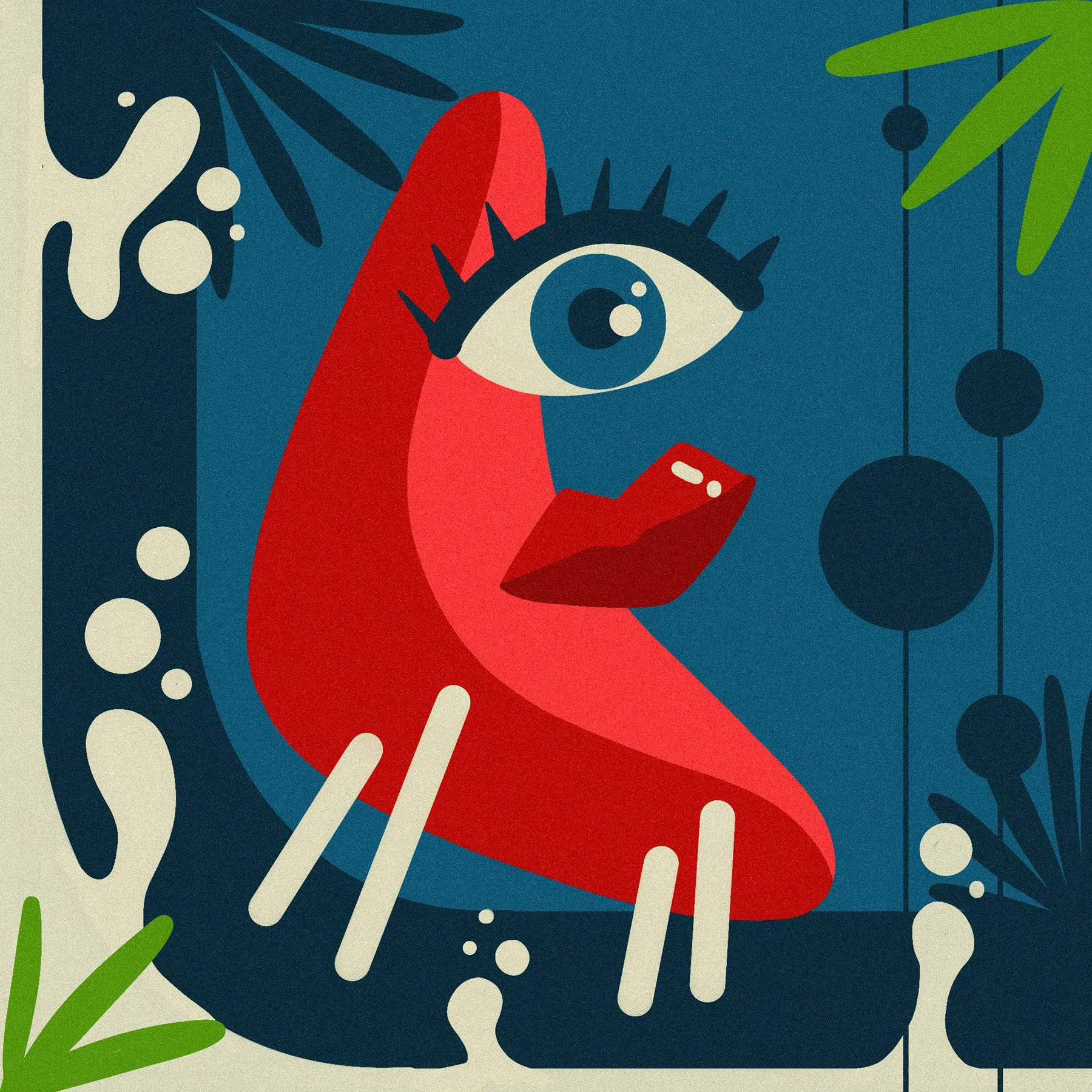
It is a story that can be read on many levels, a work that reflects a little of ourselves and invites us to question that "crazy" streak we all carry inside. And that is only the beginning.
Part of what makes this story so wondrous is its lack of common sense. We witness a world where the most ordinary things turn strange and where contradictions follow their own unquestionable logic. We have no choice but to surrender our common sense and let the story lead us into the unexpected, without explanation. After all, looking for answers would be pointless.
So why would we want to be Alice? This could be a story about connecting with ourselves, about knowing our deep and probably dark side without seeking explanations, while also seeing how the bright side governs so many of our other emotions. It could also mean escaping reality for a few seconds, not necessarily to flee our problems but simply to take a breath, to touch a world that accepts us as we are and gives us peace.
Sometimes we feel magnificent, just as Alice does when she drinks from the bottle before entering that mad world. Yet within seconds we can feel small and insignificant, adrift in an ocean made of our own tears. Imagine taking tea with a mad hatter and a slightly less mad hare. Imagine a cat appearing out of the darkness to confirm that nothing makes sense and that we are now part of the game. And to complete the scene, a wise blue caterpillar who questions our very identity.
As the cat put it: "We're all mad here."
Although they inspire real affection, the characters are not necessarily lovely or endearing. They may seem complex, but they are not, especially in a world where nothing makes sense. Perhaps that is why they feel imposing: the unknown and the unpredictable keep us on edge. There are countless interpretations of each of them, and some publications are devoted entirely to their study, linking them to emotions and personality traits.
There are many versions of Alice in Wonderland, in both books and film, and the paraphernalia built around the work is astonishing, with fans all over the world. Most of the youngest readers first met Carroll's work through the 1951 Disney cartoon, but the very first film adaptation dates back to 1903. Carroll also wrote a sequel, Through the Looking-Glass, published in 1871 and later filmed too.
We have all been Alice, even for a few minutes, even for the briefest moment. Sometimes it happens when we return to innocence, leaving behind the white rabbit and its endless obligations, the ones that made us fall down the hole in the first place, and we simply enjoy our surroundings before burning out. We have pure, happy moments too, and we savour them without asking for explanations. But something is always waiting behind them, because you know that, sooner or later, you will have to come back to reality.
Why would you want to be Alice, even for a moment?
