
Notes on design, drawing, and the things I can’t stop looking at. Sometimes an idea taking shape, sometimes an object with too much personality. Thinking out loud, mostly.
An afternoon with the Eames
Some people are so charismatic and captivating that their charm outlasts them. They make you wonder what it would have been like to meet them, to spend a whole afternoon in their company. For me, Charles and Ray Eames are one of those rare cases. Their story goes far beyond a romantic tale: it is a perfect example of a couple who kept their balance while driving their work forward, together.
Some people are so charismatic and captivating that their charm outlasts them. They make you wonder what it would have been like to meet them, to spend a whole afternoon in their company. For me, Charles and Ray Eames are one of those rare cases. Their story goes far beyond a romantic tale: it is a perfect example of a couple who kept their balance while driving their work forward, together.
Many remember them as a dynamic duo of designers, and the title is well deserved. They were a great team who built a rich career and left their mark across the design world. And like so many stories written when two different paths cross, theirs began by chance.
Charles (1907–1978) was born in St. Louis, Missouri, and started working in a printing shop at the age of ten. After discovering his father's photographs, he grew fascinated by photography and film. He studied architecture at Washington University, where he met his first wife, Catherine Woermann, with whom he had a daughter; the couple travelled to Europe for their honeymoon and spent it absorbed in the architecture of the places they visited. Back in the United States, Charles opened his own architecture studio with Charles Gray and Walter Pauley, and later founded another with his friend Robert Walsh. In 1939 he was invited to teach design at the Cranbrook Academy of Art, and a year later became director of the industrial design department. In May 1941 he and Catherine separated, and barely two months later Charles married Ray Kaiser.
Ray (1912–1988) was born Bernice Alexandra Kaiser in Sacramento, California, and her family called her Ray-Ray. Her gift for art showed early. In 1933 she began studying painting with Hans Hofmann, working with him until 1939, and she became a co-founder of the American Abstract Artists group in New York, where she held her first exhibition. After her mother died in 1940, she enrolled at Cranbrook, where she would cross paths with Charles for the first time and marry him the following year.
Their life together began with a scandal, though it was all but forgotten once you see the life they went on to build. From that point it becomes impossible to speak of one without the other: each was the other's creative catalyst. They kept their private life discreet, yet the harmony always shows in their photographs. I still smile remembering how one of my professors said, half joking and half serious, with a flicker of disbelief, that he had never seen a single picture of the two of them looking angry, only smiling. It's true. Those images radiate joy, whether they are at home in Pacific Palisades or simply out with friends. And it is that second scene where I let my imagination wander, and picture what it would have been like to share those moments with them.
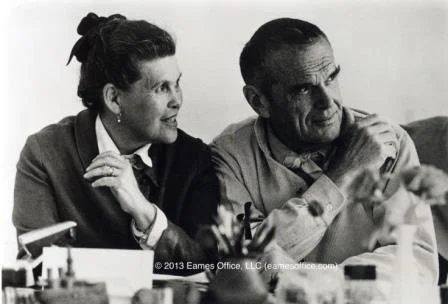
Ray & Charles Eames. © Eames Office LLC (eamesoffice.com)
Colour was, in many ways, the key to their work, alongside form the element always in the spotlight. They designed and built pavilions and furniture, produced short films, designed interiors, carried out house studies, manufactured parts for the US Navy during the war, organised exhibitions of art, photography and furniture, designed toys, and even produced advertising campaigns, among endless other things. The list seems to have no end. Still, three of them stir my curiosity most: their house, the little elephant, and one of their short films.
The famous Eames House in Pacific Palisades grew out of the home studies published in Arts & Architecture magazine in December 1945. It is Case Study No. 8, though the couple did not move in until 1949, onto a two-hectare plot shared with Case Study No. 9. At first sight the construction is simple: two levels, a main structure of steel frames, with vivid outer colours and materials neatly divided into panels of different sizes among the eucalyptus trees, all in perfect proportion. It is a spectacle of colour, and it reflects the care with which every element was chosen. Inside, decorative objects glow in the light pouring through the large windows. While Charles and Ray lived there, the house was in constant motion; everything changed place, and that was exactly the point. The idea was a space flexible enough to adapt to its inhabitants, and the Eames explored its full potential. Souvenirs gathered from around the world are still preserved inside, along with many pieces from their own furniture line. Those are the privileges of such passion and talent.
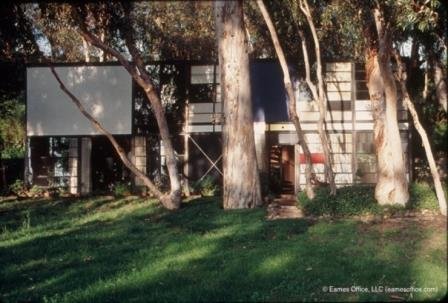
Case Study No. 8. © Eames Office LLC (eamesoffice.com)
I also love The Elephant. It caught my eye the very first time I saw it, and I could not believe it was a toy. I'll confess I still doubt that play was its original purpose. The fact that Charles and Ray had no children only fed that doubt, and it is such a neat, elegant object that it's hard to picture a child clambering over it. It was an experimental piece made of moulded plywood in 1945, and presented at a modern art museum the following year. Curiously, it was not actually manufactured until 2007, long after both had died, when Vitra produced it. That first edition reproduced the elephant in plywood in two finishes, red and natural, and later came the plastic versions you can find today in bright colours from Vitra or the Eames Office online store, versions that fill the toy's role perfectly. There is even a playful short film, made by Charles's grandson, in which this elephant is the star of its own small adventure.
But Charles and Ray were never only design. They went further, and film was part of their portfolio. One of them stole a night's sleep from me when I was a child: it made me think of how small we are against the vastness of the universe. That film was Powers of Ten, probably their best known. There are two versions: a black-and-white sketch from 1968, and the colour film it became in 1977. It carries you on a journey outward to the known limits of science at the time, and then back again. Even after all these years, the feeling it leaves still makes you think about the scale of things and stirs your philosophical side. And since pictures say more than a thousand words, you're better off watching it yourself.
After all this, there is no doubt how wonderful it would have been to spend an afternoon with this creative couple. We would surely find them bent over sketches for their next project, though I prefer the fantasy of a summer afternoon in California, in that house, sharing a lemonade with Charles and Ray. Happily, their legacy is in good hands: the Eames Foundation, led for years by Lucia Eames, Charles's daughter, and her five children, preserves and shares their work so it keeps its place in our shared culture and in contemporary design.
Links and recommended reading:
http://www.eamesoffice.com/
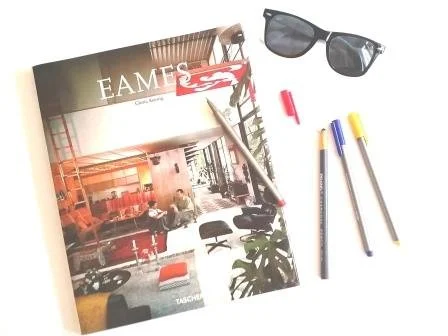
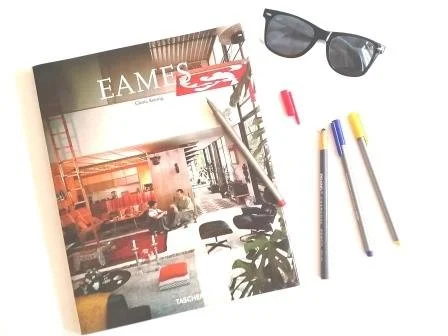
Koenig, Gloria. Eames. 2005, Cologne, Germany.
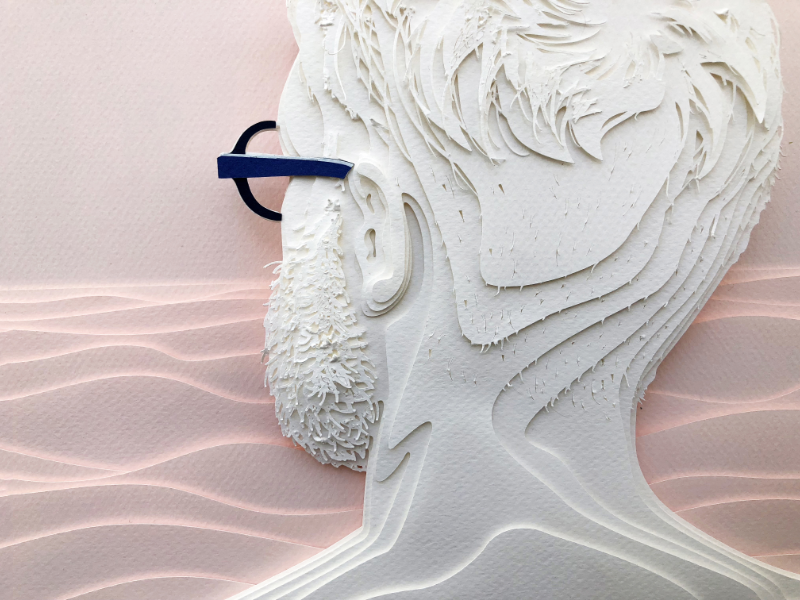
Ale Rambar | A call to "see and be seen" through art on paper
From the first moment I saw Ale Rambar's work, I was captivated. Not only by the beauty and the fine lines that the cut paper reveals as it tells a story, but by the subtlety with which it carries such a strong message. Understanding his work asks for nothing more than the viewer's own story and beliefs.
From the first moment I saw Ale Rambar's work, I was captivated. Not only by the beauty and the fine lines that the cut paper reveals as it tells a story, but by the subtlety with which it carries such a strong message. Understanding his work asks for nothing more than the viewer's own story and beliefs.
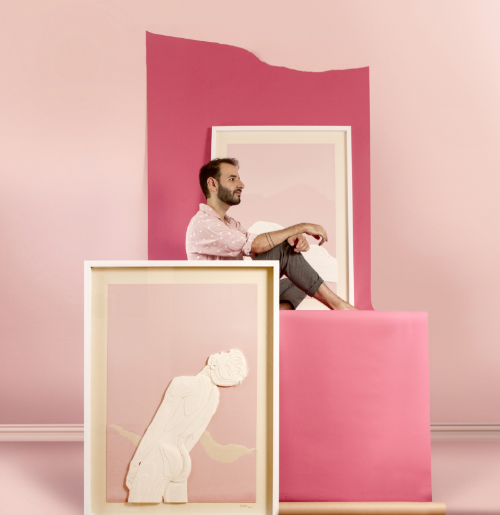
© Ale Rambar
In this conversation, Ale tells us what it was like to make the leap into an artistic life. He shares his motivations and the human side of his work, among many other things. It's an exchange that invites reflection while awakening curiosity and inspiration in equal measure.
Note: This conversation took place in May 2020.
Hi Ale. Could you tell us a bit about who you are and what you do?
I'm Ale. My stage name is Ale Rambar; my legal name is Alejandro, but I like using Ale because it carries no gender. I basically do two things. One is creating art pieces made of paper. The other is implementing designs in spaces, which is essentially environmental graphics, the middle ground between graphic design and architecture. But my main dedication is my work on paper.
We know you trained as an architect, yet you took the leap to devote yourself purely to art. Was that a difficult decision to make? What opened up this new perspective in your life?
I graduated from architecture school and later studied a range of courses, postgraduate programmes and diplomas in artistic creation, exhibition design and space design, all of them about people and their relationship with space, whether through colour, art or graphic line. What I love, as a person, is sharing ideas that help build community and bring people together through aesthetics.
And honestly, yes, it was a hard decision, and I'm still in the middle of it. I still have to move in and out of making a living from my art, mostly because of the pandemic right now. With the economy stalled, people aren't investing in art the way they did a few years ago, so I'm returning for the moment to work more focused on architecture and spaces. My goal has always been to dedicate myself fully to art, and I still hold on to that. This is only temporary.
I first decided to go one hundred percent into art around 2014. I was working in an office, keeping fixed hours and delivering projects to deadlines, the typical traditional setup, and the truth is I'm not someone who feels comfortable in that kind of environment. I like to feel a little freer. If I don't feel connected to a cause, a purpose or a social motivation greater than the work itself, it's hard for me to build the emotional bond that keeps me tied to a place. Through my art I started looking for ways to help people feel better, to feel visible rather than invisible, and all of this was shaped by what was happening in my own life.
I'm gay, and around that time things were beginning to shift in Costa Rica: many movements were opening up, and with them many people appeared pushing back against everything to do with sexually diverse people. I personally needed to see someone of my age, my time, my context, speaking about these issues from the point of view of a sexually diverse person. That's when I began my artistic career. Of course I was afraid to leave my office for something with more freedom, but I believe anyone who sets out to create something of their own has to go through that.
Not all of us are content spending our lives fulfilling someone else's dreams; some of us prefer to follow our own, and that is what I did. After thinking it through and watching how my pieces were selling, I worked out the best month to leave and handed in my notice. Then I started producing art full-time. Right now I'm at this midpoint, where I've decided to take a short break from art so as not to lose my footing as a space designer.
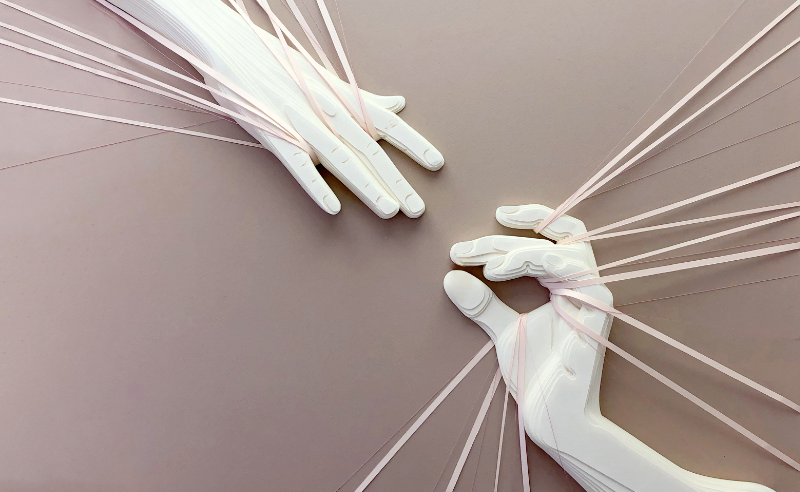
Almost There | 2019 © Ale Rambar
Let's talk about your work. Why did you choose paper and layers as your medium?
All my work on paper was born from architecture. I build my pieces the same way I once traced land contours at university. In architecture you're usually given a virgin site with topographic curves, like a natural mountain, and as you place the buildings you have to reshape the landscape, filling or excavating so that each structure fits. After analysing endless kilometres of topographic maps, building models, and studying which parts of the land were fragile, which were suitable for construction and which couldn't be built on at all, I began to wonder one day what would happen if I applied that same analysis to human bodies, taking it beyond architecture. That's how my work began.
I chose paper for several reasons. First, it lets me create very free, much looser shapes than I could with rigid materials; building in wood or plastic is difficult for me without technological processes involved, and I really like keeping tactile contact with my work. Paper is also a wonderfully humble material, within everyone's reach, everyone has at least one sheet of it at home at some point. So I started drawing a relationship between paper as an object and paper as a concept within the work itself.
In my pieces I deal with tolerance, respect and discrimination, subjects that run through our daily conversations and our reactions to the news. There's a conceptual link to paper because we handle it every day: we touch it, see it, read on it. We interact with it as a newspaper, a kitchen towel, a napkin, a piece of toilet paper. You simply decide whether to treat that paper as something worth keeping or something to let go. We do the same with discrimination. Some of us give it enough importance to say, "This can't keep happening," while many others let it pass like just another scrap of rubbish. I like making my work on paper to tell people: you already know this. You've already heard that you shouldn't discriminate, that you shouldn't write people off. And yet many let it happen anyway, just as they do with paper, letting it pass and pass again. The idea is that it stops.
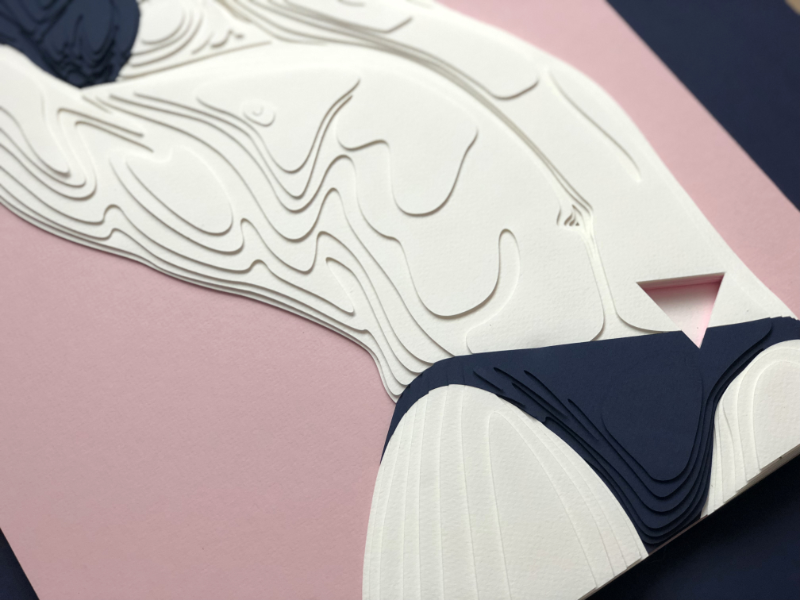
Identidad | 2018 © Ale Rambar
Other articles about your work mention how important it is for you to challenge the stereotypes and prejudices around masculinity. Some pieces show this explicitly, but I'd venture that this reflection is the central essence of almost all your work. Is that so? And how do you see your work as an opportunity to open that conversation?
The guiding axis of my work is tolerance. I draw that axis from ideas I've been unlearning since I was very young, as a Costa Rican, though the same happens to many people beyond Costa Rica; it's happening globally. So many ideas have been planted in our minds, from what our families tell us to what we see on television, very macho ideas that, at the end of the day, are deeply damaging to how we see ourselves: that men shouldn't cry, that men have to be strong, that showing emotion is a weakness, to name just a few. These are the ideas I like to question, so that they don't carry on.
The essence of my work and my exhibitions is to open a space for someone who has experienced discrimination, so that they realise someone else, somewhere, is going through it too, and that despite every difficulty things do flow and change. They get to see someone who is well, who is better after living through all of it. I try to show there is a light at the end of the road, even when it feels like society isn't on our side. If anyone has ever felt like less, felt undeserving, or believed they had fewer opportunities because of their sexuality, I want the work to show that this isn't the norm, that it isn't what happens to all of us. It matters to open up to the world and show that we have something positive to give. That's what motivates me, and why I like to open spaces for reflection and conversation, whether through my exhibitions or through the work itself.
"It is crucial to open up to the world and show that we have something positive to give, and at the same time show that there is a light at the end of the road."
Your work has appeared in exciting settings internationally, including China. What has it been like to reach such a large and diverse audience? And how do you think "cultural filters" shape the way your work is read?
Honestly, that's one of the things I find most fascinating about my work. I speak about things that are personal to me, things that happened to me, to my best friend, to people very close to me, and I've found that the more I talk about them, and the more contexts they appear in, the more people connect with them. Take exhibiting in China: it's a stricter culture than the Latin one, and even so, people came up to me saying, "That happened to me too."
The business of dolls, and the idea that boys shouldn't play with them, is relevant in many places. The same goes for saying women should have long hair, or that we all have to hide our emotions. These ideas are born from very specific contexts, but for me they're happening on a global scale, and that's what connects people. Some subjects are particular to certain realities, tied to the history of each place, but in general I've found the work has a level of universality that lets it function across contexts. That's because sexually diverse people exist everywhere, and so do more emotional men, men of every kind, and that only makes the work expand.
You've clearly built a path for your work and connected with your audience. Could you have imagined this impact when you took the leap? What would you say to the Ale of the past who was weighing that decision?
So many beautiful things have happened since I took the leap, along with plenty of demanding, testing experiences, and all of them make me feel it was one hundred percent worth it. When I jumped I was deeply insecure. I still had limits in how I expressed myself, and I was terrified to be gay in public; I think many people live that way, afraid to be who they are or to express themselves freely because their mind keeps replaying what society expects of them. Over time I've realised that the more transparent I am about my ideas, my messages and how I feel about the world, the more people connect and the further the message travels.
What I'd say to my past self is simply: don't be afraid. Be yourself, express yourself as you are, say the ideas that are in your head, because in the end many people will feel connected, and many need to see that others just like them exist. It happens that after an exhibition people come up to tell me how much it meant to see a gay person unafraid to say, "Yes, I'm gay, and this is what's happening in my life, in our country, in our context, and this is what I have to say about it." Maybe not everyone agrees, maybe some think differently, but at the end of the day what counts is representation: that they see someone who cares about these issues and speaks about them, so others know there's a light at the end of the road. That's what gives my work its value, and that's what I'd tell my past self. Don't be afraid.
There's surely much more we'd like to know about you and your work. Anything else you'd like to share?
I'd like to say that, in the end, examples are everything, at least for us as human beings. We see other people doing what we'd like to do, or carrying struggles we'd like to support, and that's how we feel identified and moved to help. So if you have a cause, an idea or a message to give the universe, the most powerful thing you can do is make it public. Make it visible. Your strongest tool is expressing yourself, exposing yourself, putting yourself out there to generate change, little by little.
And I'd add that I make all this work to support my community, to help it grow and come together, but it's also what I love doing and what I want for my life. If you support me, it helps us become more visible as a community, or as allies of the LGBT+ cause, and it helps me keep growing and carrying this message of tolerance forward. You can do that in many ways: by buying a piece, sharing the page, or passing it on to a friend.
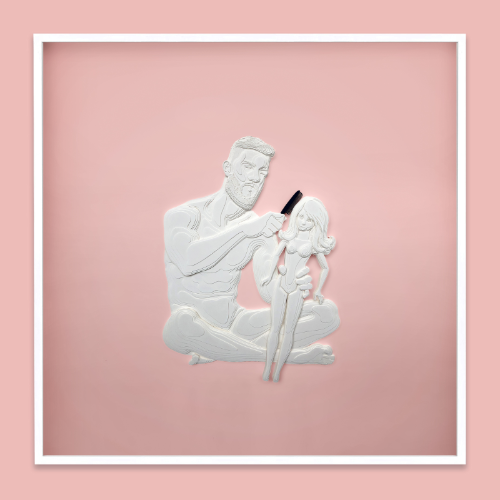
Jugando con muñecas | 2018 © Ale Rambar
Where can we find you?
Website and online store: alerambar.com
Instagram: @alerambar
Galleries:
Galería Artflow | Costa Rica
Galería Casa Escalante | Costa Rica
Galería EXTRA | Guatemala
New Gallery | China
Courses:
Domestika: a course where you can learn more about my work and the technique I use to shape my pieces. You'll learn how to make art with paper. I like helping people find their artistic voice, and if my method helps someone else grow, they're welcome.
Thank you so much, Ale, for sharing your story, your inspiration and your work with us.
_____
Where is Ale now? (July 2026)
Since this conversation, Ale's path has grown beyond his own practice. Today he co-leads Estudio Rambar, a contemporary art platform he founded with Gonzalo Solórzano, devoted to giving visibility to Costa Rica's creative talent. Representing more than a hundred artists across many disciplines, the studio works as a bridge between creators and projects, collaborating with collectors, architects, designers, hotels and companies to carry the country's art to new audiences at home and abroad.
You can find Estudio Rambar at estudiorambar.com
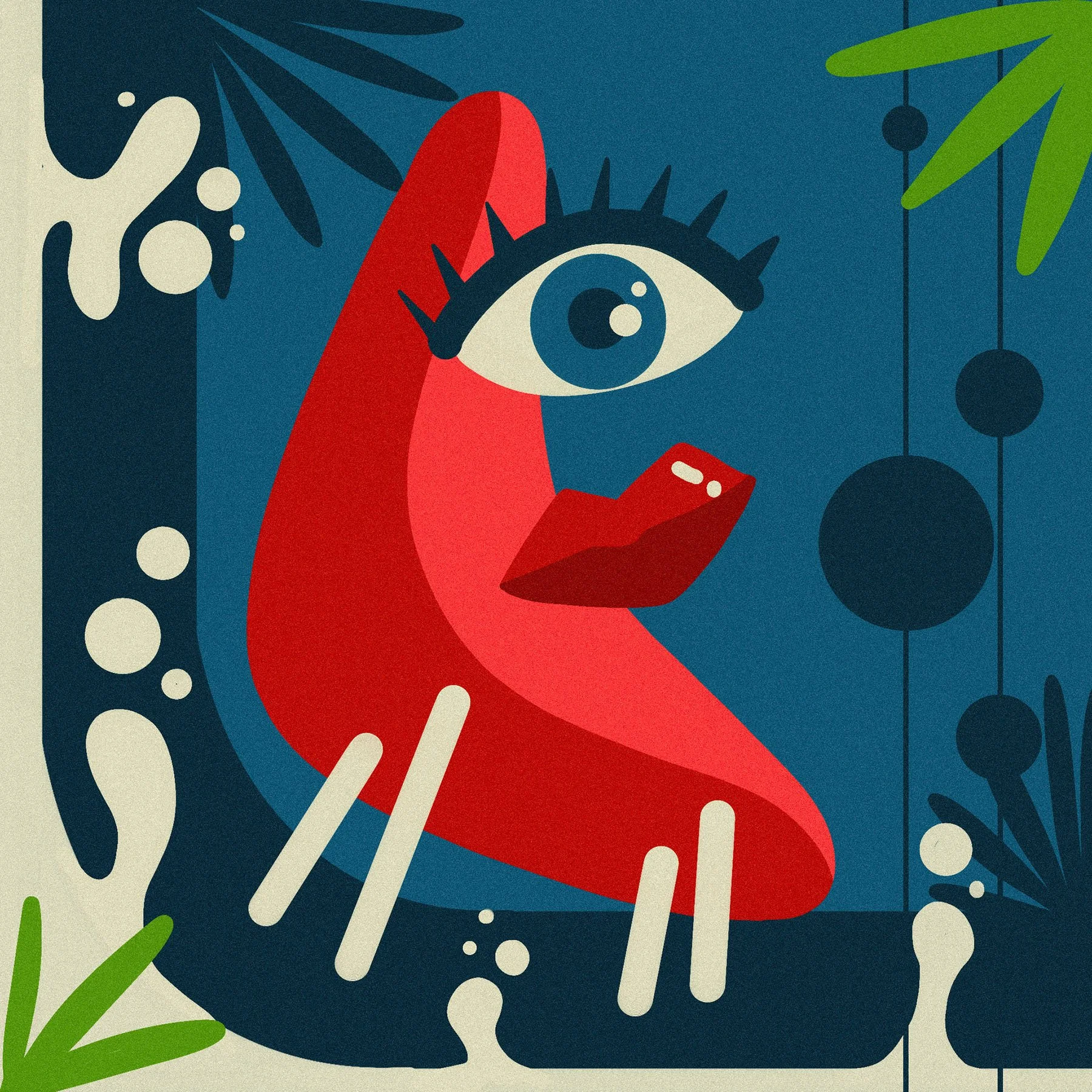
We all want to be Alice, at least once!
You surely know the story of a girl chasing a white rabbit. She falls down a vast hole and discovers a world full of fantasy and unusual characters who later accompany her on a great adventure. I'm talking about Alice's Adventures in Wonderland, one of the most popular stories written by Lewis Carroll and published in 1865. More than a century later, Disney's film would push its already considerable fame even further.
You surely know the story of a girl chasing a white rabbit. She falls down a vast hole and discovers a world full of fantasy and unusual characters who later accompany her on a great adventure. I'm talking about Alice's Adventures in Wonderland, one of the most popular stories written by Lewis Carroll and published in 1865. More than a century later, Disney's film would push its already considerable fame even further.
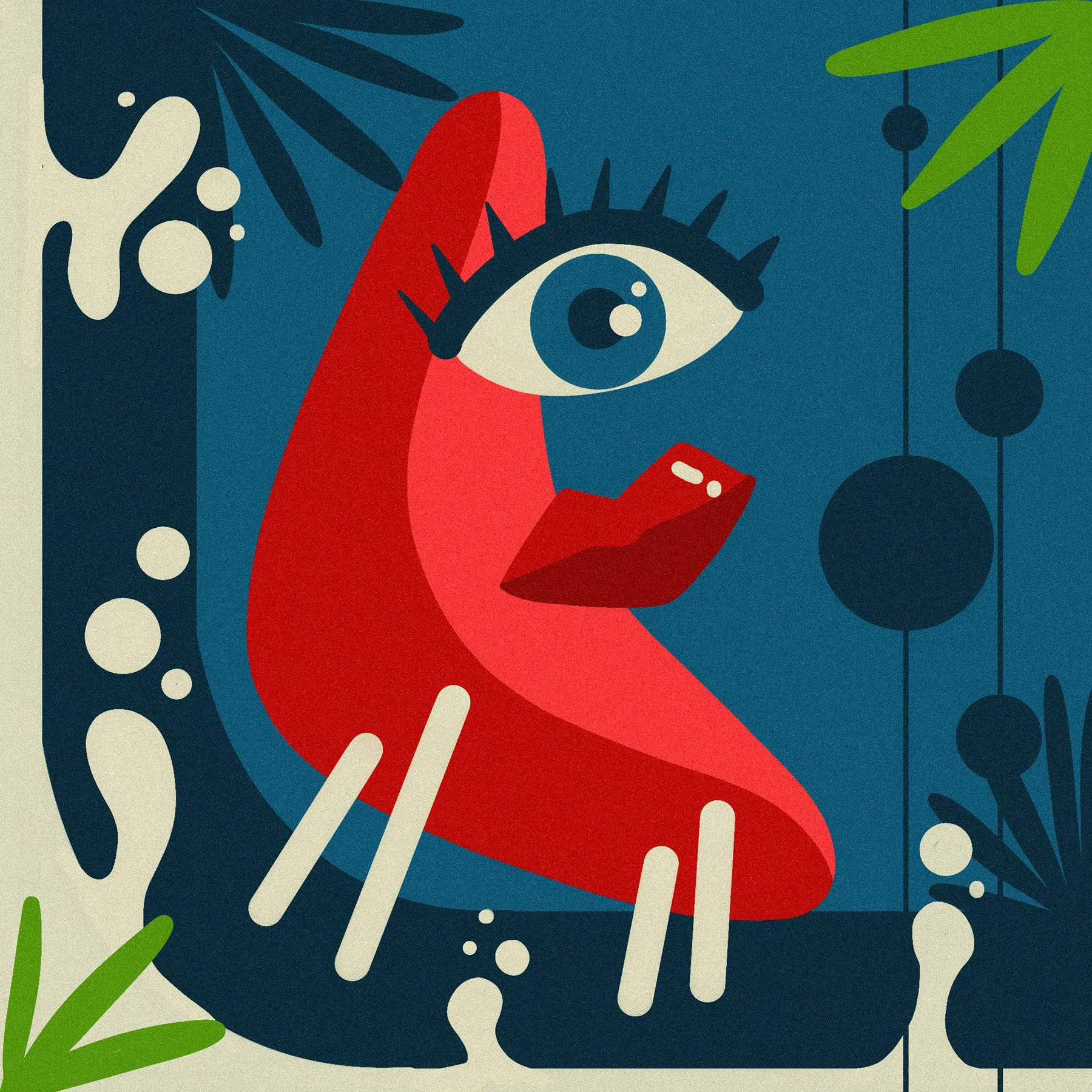
It is a story that can be read on many levels, a work that reflects a little of ourselves and invites us to question that "crazy" streak we all carry inside. And that is only the beginning.
Part of what makes this story so wondrous is its lack of common sense. We witness a world where the most ordinary things turn strange and where contradictions follow their own unquestionable logic. We have no choice but to surrender our common sense and let the story lead us into the unexpected, without explanation. After all, looking for answers would be pointless.
So why would we want to be Alice? This could be a story about connecting with ourselves, about knowing our deep and probably dark side without seeking explanations, while also seeing how the bright side governs so many of our other emotions. It could also mean escaping reality for a few seconds, not necessarily to flee our problems but simply to take a breath, to touch a world that accepts us as we are and gives us peace.
Sometimes we feel magnificent, just as Alice does when she drinks from the bottle before entering that mad world. Yet within seconds we can feel small and insignificant, adrift in an ocean made of our own tears. Imagine taking tea with a mad hatter and a slightly less mad hare. Imagine a cat appearing out of the darkness to confirm that nothing makes sense and that we are now part of the game. And to complete the scene, a wise blue caterpillar who questions our very identity.
As the cat put it: "We're all mad here."
Although they inspire real affection, the characters are not necessarily lovely or endearing. They may seem complex, but they are not, especially in a world where nothing makes sense. Perhaps that is why they feel imposing: the unknown and the unpredictable keep us on edge. There are countless interpretations of each of them, and some publications are devoted entirely to their study, linking them to emotions and personality traits.
There are many versions of Alice in Wonderland, in both books and film, and the paraphernalia built around the work is astonishing, with fans all over the world. Most of the youngest readers first met Carroll's work through the 1951 Disney cartoon, but the very first film adaptation dates back to 1903. Carroll also wrote a sequel, Through the Looking-Glass, published in 1871 and later filmed too.
We have all been Alice, even for a few minutes, even for the briefest moment. Sometimes it happens when we return to innocence, leaving behind the white rabbit and its endless obligations, the ones that made us fall down the hole in the first place, and we simply enjoy our surroundings before burning out. We have pure, happy moments too, and we savour them without asking for explanations. But something is always waiting behind them, because you know that, sooner or later, you will have to come back to reality.
Why would you want to be Alice, even for a moment?
Mónica García | vistaenplanta: turning fears into passions
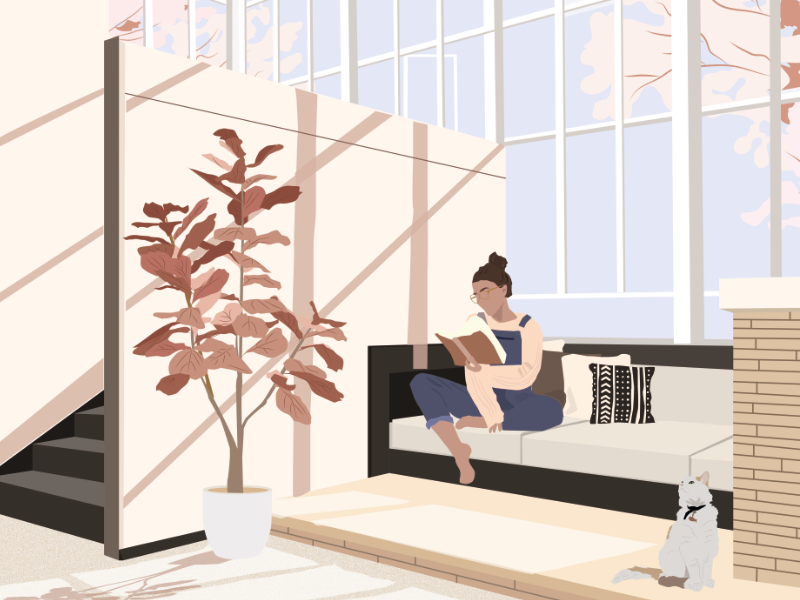
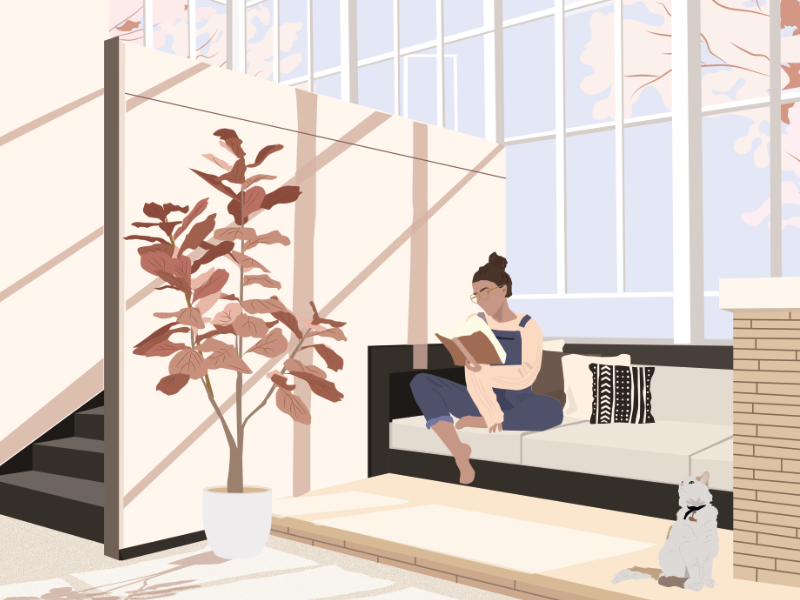
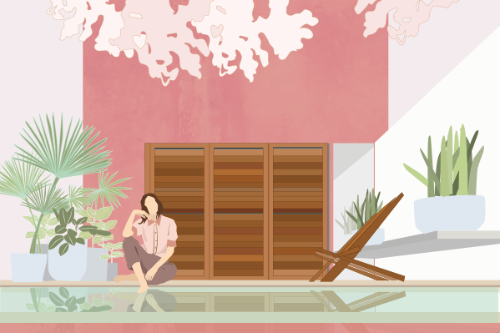
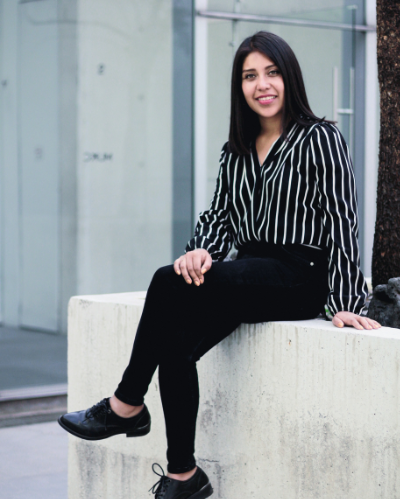
VISTAENPLANTA is a project led by Mónica García, a Mexican architect and illustrator whose gift is listening to spaces and bringing them to life through architectural graphic representation, with an exceptional touch all her own. Through the language of colour and line, she tells the story of buildings, exteriors and other architectural projects, capturing their essence in vivid illustrations.
VISTAENPLANTA is a project led by Mónica García, a Mexican architect and illustrator whose gift is listening to spaces and bringing them to life through architectural graphic representation, with an exceptional touch all her own. Through the language of colour and line, she tells the story of buildings, exteriors and other architectural projects, capturing their essence in vivid illustrations.
© Mónica García — vistaenplanta
For Mónica, her creative passion proved stronger than her fears, and she has shown it by growing this project. Her work rests on her professional training but takes a purely creative approach, always opting for a celebration of creativity in which contours and pastel tones are the hosts.
That celebration is always open to the public. On her Instagram account she often shares advice and information about her workshops, and occasionally reveals the secrets and curiosities behind her work. And if you'd like a closer look at her creative process, you can follow her tutorials on her YouTube channel.
Without further ado, I hope you enjoy this conversation with Mónica as much as I did.
Note: This conversation took place in November 2020.
Hello, Mónica! Could you tell us a bit about yourself and what you do?
Hello! I studied architecture in Hidalgo, Mexico. Five years after graduating, I decided to start an architectural illustration project, which later grew into a self-managed venture. I run workshops to teach my drawing method, and in doing so build a community that learns and motivates one another.
I know how hard it is to find the perfect balance between the technical and creative sides of architecture. What has been your strategy for finding it? Do you think you have?
It really is difficult. My own balance leans more towards the creative, and that shows in my work. That's how the idea came about of doing something more artistic, something I could blend with architecture, because I honestly lost interest in the career itself. As I advanced through my studies, the semesters grew more and more technical. At work the interest came back, but there was still a void: I felt I wasn't doing what I was truly passionate about.
Tell us a little about VISTAENPLANTA. How did you decide to start a project built around architectural illustration?
It all grew out of my urge to build something of my own, based on what I genuinely loved.
I've been drawing since I was a child, and I was drawn to the art world from early on, though it was insecurity that led me to choose architecture over fine arts. I don't regret studying architecture, but I never stopped drawing.
It was in my last job that I really began to lose myself, because I was no longer doing anything I liked. The urge to draw was still there, very much alive, so I decided to build something for myself and for the long term.
I knew it would be risky to start a new project from scratch, with no resources, but on the other hand I had the time and the willingness. I had never been so excited to do something of my own.
© Mónica García — vistaenplanta
For three years I kept imagining what it would be like to work on something tied to illustration, while knowing that architecture was the path I'd chosen. I knew it would be a little crazy, and I wasn't sure it would ever work, but that's how I set my fears aside. The only thing that mattered was doing what I'd wanted for so long. Ever since, all my energy and time has gone to vistaenplanta.
This is more than a business venture or a source of income. It's how I get to be myself, and for me that's the greatest achievement of my life.
In your illustrations you've clearly found your artistic voice, one that gives life to the spaces you represent. How do you choose the scene that gives each illustration its context? Do you have a process for selecting the colour palette?
It isn't enough to see spaces as they were designed or built; I want to tell a story that unfolds within them. That's my starting point. Most of my illustrations speak of my own experiences and tastes, and of how I'd like others to see architecture. From there I decide the kind of character I want to draw, the emotions I want to convey and, of course, the colour palette. I simply imagine how I'd like the scene to be seen, and that's closely tied to my mood. I'm a big dreamer and spend my time picturing scenarios, which is where my ease for drawing comes from.
I've noticed you've taken a step further, turning VISTAENPLANTA into a project for sharing your passion and your process. Would you tell us about this platform, the stage it's at, and your vision for it?
At first I didn't dare give workshops. I was afraid to share my method, not out of possessiveness, but because it meant opening myself up to people I didn't know. Later I understood they simply wanted to learn from me, and I began designing a method that was easy and dynamic. So far the workshops have been in person, occasionally virtual, but I'm already working on making them available online. That would help enormously with time, since most participants either work or study.
I hope to have everything in place by 2021 and to keep growing with the project.
What has been the greatest satisfaction your work has given you so far?
The greatest is being able to be myself, since this is a project where I can grow both personally and artistically.
The second is having direct contact with people and seeing them identify with me, because in some way I'm having a positive impact on their lives. That means everything to me. My project is about growing, and if I grow, so do you. I invite you to achieve whatever you set out to do, whatever it may be, and I try to prove it possible through my own project.
The third is having time on my side, and being able to shape it around my needs. I used to suffer under a relentless twelve-hour schedule, which is no good for the soul. I love being free and having my time at my own disposal, and that too has been a great satisfaction.
Of course, there's much more we'd like to know about you and your work. Anything else you'd like to share?
Be true to yourself. Fear makes us miss out on a world of possibilities, but if you manage to overcome it, you'll grow in whatever area you choose. The only thing standing in your way is you.
"Fear forces us to miss a world of possibilities, but if you manage to overcome it, you will grow in the area you choose."
© Mónica García — vistaenplanta
Where can we find you?
Website: vistaenplanta.mx
Instagram: @vistaenplantamx
YouTube: VISTAENPLANTA
Thank you so much, Mónica. We wish you many more successes and satisfactions with this project.
_______
Where is Mónica now? (July 2026)
Since this conversation, Mónica has continued to lead vistaenplanta successfully, growing a community of people passionate about illustrating architecture. She now also shares her knowledge through talks and conferences, inspiring students drawn to the world of illustration.
Stop being a b*tch to the creative you!
Creating is a beautiful and complex process. Coming up with new ideas takes a lot, and it often carries the feeling of doing something wrong, because ideas rarely develop the way you imagined. You can become your own worst critic in a harmful, destructive way, forgetting how important it is to be kind to yourself. Stop it!
Creating is a beautiful and complex process. Coming up with new ideas takes a lot, and it often carries the feeling of doing something wrong, because ideas rarely develop the way you imagined. You can become your own worst critic in a harmful, destructive way, forgetting how important it is to be kind to yourself. Stop it!
Nobody said it was easy. Getting inspired is not as straight or as pure as many think. It is almost impossible to summon a simple idea when you are looking for one, and then it arrives from nowhere, at the most inopportune moment. By the time you want to use that spontaneous spark, you have either forgotten it or it no longer feels as right as it did.
And when inspiration finally arrives, you still need the motivation to begin. If you love creating, why would you need encouragement? Yet finding that first spark of energy can be exhausting. Once you start, you have to keep up with the process and face problems you never anticipated. Then you finish, drained, and you are probably not happy with the result. Was it worth all the stress and frustration? Stop being a b*tch to yourself!
You carry an internal voice that criticises your work nonstop, sometimes before the work even begins, as soon as a new idea appears. It tells you the concept is not good enough, that you are not talented enough, that your skills are not at the level, that none of it is worth it. This voice is part of you, so you cannot simply silence it, but that does not mean it has to stay in control.
You have probably heard of impostor syndrome: that feeling that you are faking it and that someone will expose you at any moment. It is paralysing, laced with anxiety, and it stops you from giving your all. That is the real reason you allow yourself to be so disrespectful to your creative self.
Social media does not help. You are flooded with talented people, excellent work, and polished results. But many of those same creatives will tell you how much they struggle. Even seasoned professionals live with impostor syndrome and are cruel to themselves sometimes. Remember that social media shows curated content; there is a lot of work, failure, and tears behind those posts. If you don't believe me, take a look at your own feed.
There is no standard recipe for this. As with any problem, the first step is to acknowledge it, because recognising it is what lets you act. Start by being kind to yourself and respecting your own voice and intuition. If you are creative, you already know you create because you love it. Keep that in mind, even when the process is a struggle.
As Pablo Picasso said, "Inspiration exists, but it has to find you working." You shouldn't wait to feel inspired before you begin. Start, warm up, fail, and let your ideas take shape. Don't get frustrated in the process; let it flow and enjoy watching something new come to life.
So stop being a b*tch to the creative you. They deserve more compassion. Learning to be kind to yourself takes time, but the results are worth it. Why does creating have to mean suffering? Change your attitude, change the way you talk to yourself, give yourself new opportunities, and keep making.